
 About Us
 Products
 Warranty
 User Tools
 News
 Blogs
 Homeowners
 Professionals
 Industrial
 Colors
 Ideas
 Products
 Resources
 Highlights
 Payment
 blog
 Investors
 Dealers
 Careers
 Contact Us
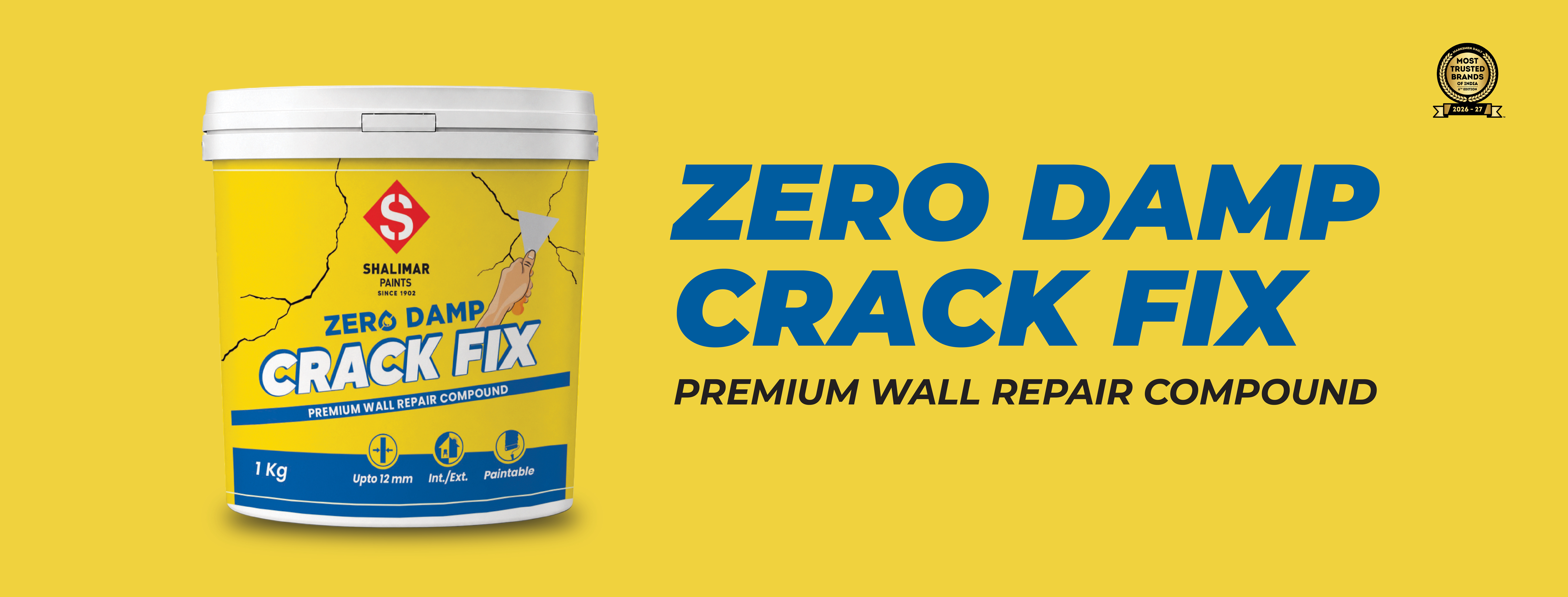

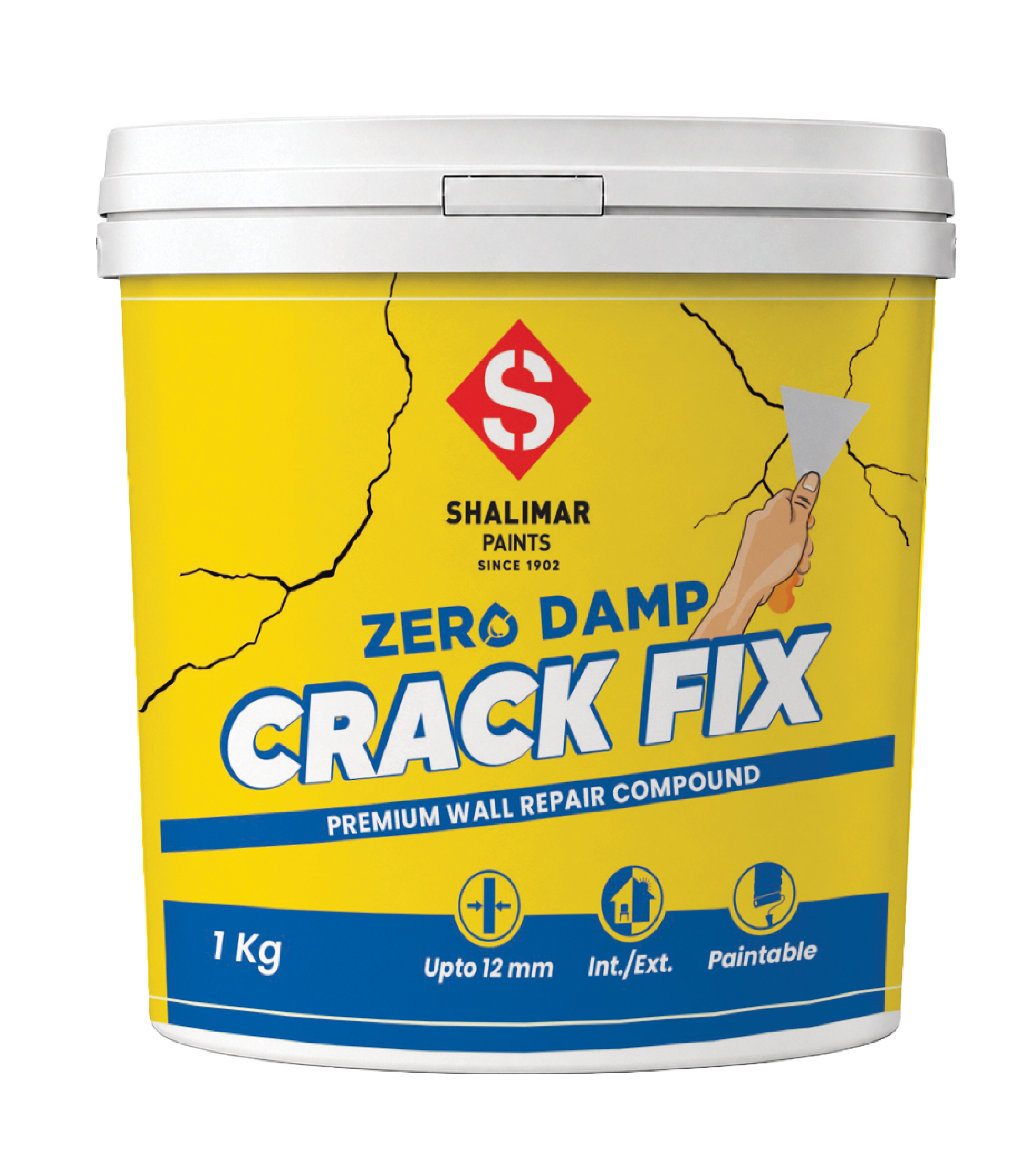
Zero Damp Crack Fix
ZERO DAMP CRACK FIX is a ready-to-use, water-based acrylic crack-filling and sealing compound designed for sealing non-structural cracks and joints. It helps restrict the passage of air and moisture, accommodates normal expansion and contraction, and can be overpainted after adequate drying. It is suitable for interior and exterior building applications.

PAINTABLE

INTERIOR
EXTERIOR

CRACK BRIDGING
UPTO 12 MM
PAINTABLE
INTERIOR
EXTERIOR
CRACK BRIDGING
UPTO 12 MM
-

500gm -

1kg


Surface Preparation
-

Open the cracks and widen them to form a V-shaped groove.
-
Surfaces must be clean, dry, firm and free from dust, grease, oil, loose debris, old sealant and poorly adhered coatings.
-
On compatible non-porous surfaces, cleaning with a suitable solvent, such as alcohol or acetone, may be used. Do not use kerosene or gasoline for surface cleaning.
-
Where paint is flaking or weak, sand and remove all unsound material before application.
Application Methodology
-
After cleaning, apply a water-based primer to the formed V-shaped groove.
-
Apply a continuous and adequate bead of ZERO DAMP CRACK FIX into the crack or joint, ensuring good contact with both sides by extending the application up to 3 mm on either side of the groove.
-
Apply another coat of ZERO DAMP CRACK FIX after the first coat has dried, following the same application method.
-
Apply the material using a putty knife, blade, spatula or caulking gun.
-
Tool and smooth the sealant within the tooling time to ensure full contact and achieve a neat finish.
-
Allow adequate ventilation and drying. Protect the freshly applied sealant from water during the initial drying period.
-
Before painting, ensure that the sealant is sufficiently dry and conduct a small compatibility trial, especially when using solvent-based or oil-based paints.
Good Practice
-
Use masking tape wherever a clean edge is required and remove it before skin formation.
-
Avoid overfilling or creating excessively deep sections. Use appropriate backing material for larger joints wherever required.
-
Drying time may vary depending on bead size, temperature, humidity, ventilation and substrate porosity.
Application Areas
-
Cracks and gaps in walls and plastered surfaces.
-
Perimeter sealing around windows and door frames.
-
Corners, skirting/baseboards, mouldings and trims.
-
Vents, frames and similar non-structural building joints.
-
General gap filling prior to painting and finishing.